

My Dream Team Philippine AFCS
Sports fans sometimes assemble their own virtual dream teams. The teams have nothing to do with reality other than the names of the players. The dream team will never play together, but apparently fans have some fun with it.
Team sports do not interest me. However, I have spent hours watching YouTube videos of people repairing an Apollo Guidance Computer (AGC). In my defense, this AGC actually went to the moon and back!
It is therefore not entirely out of character that I thought it would be fun to assemble my dream team Philippines AFCS, and I hope you won’t find this any stranger than a "football dream team".
My article has become rather long, even so I have still only scratched the surface. In case you do not want to read the whole thing, these are the main principles of my ideal AFCS:
-
Full transparency and openness. All specifications are in the public domain.
-
The rules are designed explicitly to allow anybody to join the system, from the smallest provider somewhere in the provinces to the biggest operator.
-
Interoperability is based on ubiquitous acceptance of transit cards and optional support for QR tickets and general purpose payment cards.
-
Cost is driven by competition, not by government regulation. The only function in the system that requires a contract with the scheme provider (government) is the central clearing and settlement system.
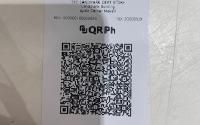
QRPh Part 1 - What is it, and why does it exist
Most, maybe all, countries in South East Asia have their own national QR code standard which is usually based on the EMV merchant-presented QR standard (for instance, Cambodia (1), Singapore (2) or Vietnam (3).
The Philippines, where the standard is called QRPh, is no exception. However, as far as I know, neither the QR code part nor the backend processing part of the QRPh standard are in the public domain.
But since the QR codes out there can be analyzed based on the EMV standard, and the backend processing can be inferred from press releases and other public sources, we know quite a bit about it.
In the next couple of posts on my blog, I will look at the QR code format, the user experience, the backend processing and the EMV underpinnings.